
Which Pantheon Website Is the Official One? In Rome There Are Four, and They Sell Different Things
Four sellers at the Pantheon use the word official, and they sell different things. The €7 admission is the Italian state's, with no booking fee and no audio guide. The official audio guide is the basilica Chapter's. Resellers list the same visit from €4.70 to €25.
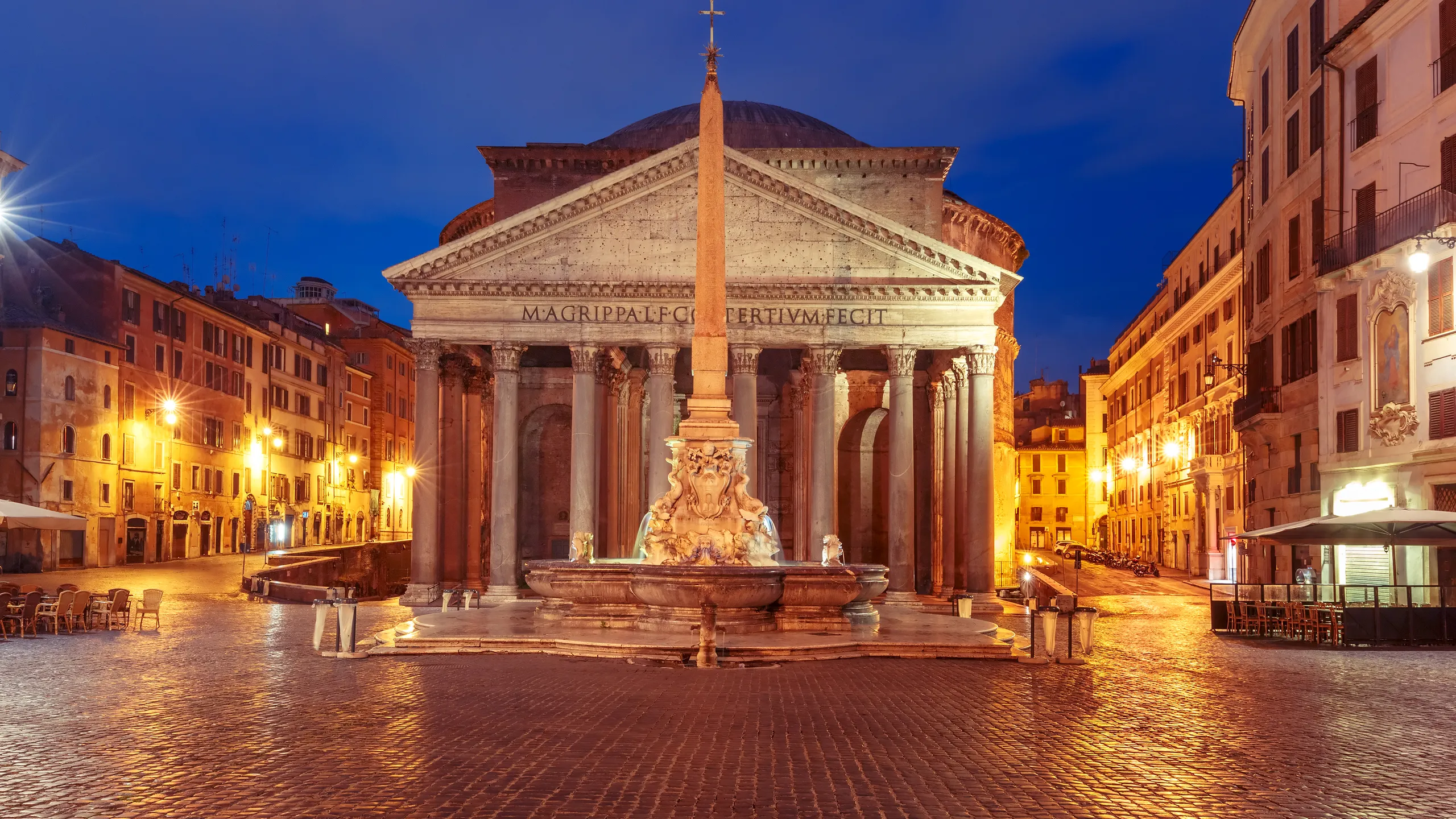
There is no single official Pantheon Rome website. Four separate sellers use the word, all four are entitled to it in some way, and they are selling different things: the admission ticket, the audio guide, a guided route behind the rotunda, and a resold bundle of the first two. The Italian state charges €7 to walk in. One listing in our own catalogue resells that same visit for €25.
None of the four is lying. That is what makes the question hard, and it is why the forum threads about it are titled is this a scam.
What follows is the version nobody selling a ticket can write, because three of the four doors are commercial and we take a commission on one of them. The disclosure is at the bottom of this page, in full, with the rates.
Who owns the Pantheon in Rome, and who keeps the money
The building is state property, and that one fact settles most of the confusion. The Lateran Treaty of 1929 lists what passed to the Holy See, and the Pantheon is not on it. The monument is demanio, public property of the Italian state, administered by the Ministry of Culture through its national museums directorate for Rome.
The Church is inside it all the same, and not as a tenant of convenience. The rotunda has been a consecrated church since the seventh century, under the name Santa Maria ad Martyres, and the Chapter of the basilica runs the liturgy. Mass is at 17:00 on Saturdays and the eves of feast days, and 10:30 on Sundays and feast days. Entry during Mass is free, for worship, and the Ministry publishes that on the monument's own page.
So two institutions have standing, and the money from the door is shared between them. Under the 2023 convention between the Ministry and the Diocese of Rome, 70 per cent went to the Ministry and 30 per cent to the Diocese. A new convention came in with the price rise on 1 July 2026 and its split has not been published; what is published is that the €2 of the increase is earmarked for the Piano Olivetti per la Cultura. The full text of neither agreement is public, and neither is its expiry date. The observed rhythm of renewal is roughly three years: 2010, 2023, 2026.
That is the honest shape of the answer. Official here is not one authority with one website. It is two institutions with a revenue agreement, one of which sells the door and the other the commentary.
The state sells the door. The Church sells the commentary. Both are official, and neither sells what the other sells.
The four sellers, and how to tell which one you are on
One monument, four tills. The column that matters is not who they are but what they are able to sell you.
The Italian state, the only one that sells admission
The Ministry of Culture, through its national museums directorate for Rome. Admission is €7, €2 for EU citizens aged 18 to 25, free under 18, sold on the Musei Italiani portal and app and at the desks and machines on site. How to recognise it: the price is exactly €7, payment runs through PagoPA, and there is no audio guide anywhere in the basket.
The Chapter of the basilica, which sells the audio guide
The church inside the monument sells the official audio guide and guided visits on pantheonroma.com. It does not sell admission, and it never has. How to recognise it: Mass times, liturgy and the basilica's own name on the page, and no €7 line anywhere on it.
A private concessionaire, holding three domains
The domains pantheonroma.com, .it and .org belong to one private company, the one behind the official audio guides. It is neither the state nor the Church: it is a supplier to the monument that happens to occupy the search results. No public source names the company or the term of its contract, and we are not going to guess at either.
The booking platforms, reselling the first two
Viator, Tiqets, GetYourGuide, Civitatis, Headout and the sites fed by them. They resell the €7 admission with something attached: a recorded commentary, a host at a meeting point, a slot already chosen. That is a real service with a real price. How to recognise it: a checkout that is not PagoPA and a price that is not €7.
The order of that grid is the order of the money. The state takes €7 and shares it with the Diocese. The Chapter sells a recording. The concessionaire holds the domains. The platforms sell the first thing with the second attached and keep the difference.
Twenty domains in English live on this monument alone, and seven of them were registered or re-registered between 2024 and 2026. Nine of the twenty sell nothing at all: five have inventory of their own, three belong to the audio guide concessionaire, and one survives on display advertising. The crowding is recent, which is part of why the answer to this question has never been written down.

What the official Pantheon Rome website sells, and what it does not
The state channel is the Musei Italiani portal and its app. Read the catalogue there and it is shorter than the market around it would suggest: individual admission, group admission, the evening openings when they are running, and the guided route called Beyond the Pantheon. That is the list, all of it.
There is no audio guide on it. Not a cheap one, not a bundled one. None. Every product advertising an official audio guide is selling the Chapter's, bought through a different door, and that single gap is where most of the is this a scam threads begin.
Four more things about the state channel are worth having before comparing prices.
- No booking fee. The ministerial page states that no presale right applies, so €7 is €7. That is not true of any reseller.
- The ticket carries a name, and the document is checked at the door. Since 10 March 2026 the name can be changed once, and no later than 72 hours before the slot. A name that does not match the document means no entry.
- Twenty-five tickets per transaction, allowed once per user per time band.
- The Ministry warns in writing that buying from unofficial resellers may not allow entry. Their wording, not ours.
And one more that belongs here rather than on a sales page: skip-the-line entry does not exist at the Pantheon. The ministerial page says so in English, in as many words. Entry runs in nine timed bands with a ceiling of 1,200 people in each, and there are three queues at that door which move at very different speeds. Choosing the right one is worth more than any product promising to let you avoid them.
| The door | What it actually gets you | Price |
|---|---|---|
| Musei Italiani, the state portal | Admission and nothing else. No booking fee. | €7 full, €2 reduced, free under 18 |
| Musei Italiani, Beyond the Pantheon | 45 minutes in the spaces behind the rotunda, admission included | €10 plus €7, so €17 |
| At the door, free entry | During Mass, or on the first Sunday of the month. Neither is bookable. | €0 |
| The Chapter of the basilica | The official audio guide and guided visits. No admission. | Sold separately on pantheonroma.com |
| Booking platforms, 13 English audio-guide listings in our catalogue | Admission plus a recorded commentary, a host, or a slot already chosen | €4.70 to €25.00, median €15.99 |
Two numbers in that last row deserve a second look, because they are exactly what we would flag on somebody else's page. The bottom of the range, €4.70, is less than the state's own admission. A listing priced below €7 cannot contain a full-price adult ticket with a service on top of it. Either the price in the feed is older than the July increase, or the product is the commentary without the entry. We cannot tell which from the feed and we are not going to guess in public: the thing to read is the inclusions line on the product itself, which before paying is the most useful line on the page.
The top of the range is worth questioning from the other direction. €25 for a €7 admission and a recorded commentary is an €18 service charge. Sometimes that buys something real: a host who walks you to the right one of three queues, a slot already chosen on a full afternoon. Sometimes it buys a link sent by email. The price alone does not tell you which, and neither does the word official. Our page on how to choose a Pantheon tour sets out what the difference looks like on a product page.
The official Pantheon Rome audio guide belongs to the Church

Official, and not the state's
The one product the state does not sell
The confusion over the audio guide is not the reader's fault. The state owns the building and sells the way in. The Chapter of the basilica sells the commentary, and a private company operates that concession. All of it is true at once, and none of it appears on the state's catalogue.
Our own catalogue, read on 7 October, lists thirteen English-language tickets with an audio guide attached, and exactly one of the thirteen uses the word official in its title. The other twelve are somebody's recording, which may be better or worse than the Chapter's, and in those the word is doing no work at all.
One caution about the basilica's own site, since this is the article that sends readers to it. It is reliable for opening hours, liturgy, its own products and the state of the monument. It is not reliable for the monument's measurements or its history: it gives the oculus as 8.2 metres where the scholarly consensus converges on about 9, and that single figure is the origin of half the wrong measurements circulating in English. Use it for what it sells, not for what it describes. The numbers we publish, and the range of disagreement behind them, are on our page about the dome and the oculus.
Beyond the Pantheon, where two roads lead to the same room
Beyond the Pantheon is a 45 minute visit to the spaces behind the rotunda, the Basilica of Neptune, for groups of 25, in Italian or English, every day except the first Sunday of the month. It costs €10 on top of the €7 admission, €17 in total. A guide who wants the whole slot pays €150 plus the tickets, booking at least four days ahead.
Where our sources part company is the till. One has it sold on the state portal, another has it sold by a cultural concessionaire, and both appear to sell it. We have not resolved which is the primary channel, so we are publishing the disagreement rather than the tidier version of it. Anyone booking that route should check both.
There is a second thing about the same product worth carrying away, and it is the best illustration in this story of why official does not mean current. After the July 2026 increase, the ministerial page for the special route went on showing the old admission price while the monument's main page showed the new one. Same institution, two pages, two prices. Where they disagree, the main page wins.
Three seconds, four doors
None of this needs research at the moment of buying. Four checks, in the order they turn up on a screen:
- The price. €7, €2 or nothing, with no extras, is the state. Anything between roughly €9 and €30 with a service attached is a platform.
- The checkout. PagoPA means the state. A card form carrying a platform's branding means a platform.
- The audio guide. The state does not sell one. If the basket contains one, the page is not the state's, whatever the header says.
- The name. The state asks for the name of each visitor, because the ticket is nominative and the document is checked at the door. If a reseller never asks for one, ask whose name will be on the ticket before paying.
A fifth check costs nothing and settles the rest: the Pantheon is in neither the Roma Pass nor the Omnia circuit. The Ministry states it plainly. Almost nobody selling a Rome city pass repeats it. Our page on tickets and prices keeps the full list of who pays what, with the date each figure was checked.
What this page earns, and from whom
This site makes money when a reader books an experience through one of its links. The rates are not confidential and there is no reason to be coy about them. Viator pays 8 per cent of a completed booking. Tiqets pays 8 per cent, rising to 10 above a hundred orders a month and falling to 4 when a coupon is used. Civitatis pays 8 to 10 per cent in bands, plus €1 per participant on its free walking tours. GetYourGuide does not publish its rate. The attribution window is 30 days, 31 at GetYourGuide.
The first thing this article said is that the cheapest way in is a €7 ticket from a state portal which pays us nothing. The second is that skip-the-line does not exist at a monument where some of the products in our own catalogue use the phrase. Publishing both costs less than having a reader find them out at the door, and it is the whole basis on which a page like this is worth reading at all. How we work is set out on our editorial policy page.
Questions about the official Pantheon website
What is the official website for Pantheon tickets in Rome?
The Italian state's. Admission is sold on the Musei Italiani portal and app, run by the Ministry of Culture, at €7 full and €2 for EU citizens aged 18 to 25. Payment goes through PagoPA, there is no booking fee because no presale right applies, and there is no audio guide on that channel at all.
Is pantheonroma.com the official Pantheon website?
It is official for one half of the monument. The Chapter of the basilica sells the official audio guide and guided visits there, and it does not sell admission. The three domains, pantheonroma.com, .it and .org, belong to a single private company, the audio guide concessionaire; no public source names it, so we do not. One warning: the site is dependable for hours, liturgy and products, and wrong on the monument's own numbers, including the oculus, which it gives as 8.2 metres.
Who owns the Pantheon, the Italian state or the Vatican?
The Italian state. The Lateran Treaty of 1929 sets out what passed to the Holy See and the Pantheon is not in it. The rotunda has been a consecrated church since the seventh century and the Chapter runs the liturgy inside it, which is why both institutions appear official. Under the 2023 convention the ticket revenue was split 70 per cent to the Ministry and 30 per cent to the Diocese of Rome. The split in the convention that took effect on 1 July 2026 has not been published.
Is there an official Pantheon audio guide, and where do you buy it?
Yes, the Chapter's, bought on the basilica's own site rather than the state's portal, which sells none. Our catalogue on 7 October 2026 listed thirteen English-language tickets with an audio guide attached, from €4.70 to €25.00, median €15.99, and exactly one of them called its audio guide official in the title.
Does the official site charge a booking fee for the Pantheon?
No. The ministerial page states that no presale right applies, so the €7 is the whole price. Resellers add their own margin on top, and on the listings in our catalogue that margin runs to about €18 at the top of the range.
Can I be refused entry with a ticket bought from a reseller?
The Ministry warns in writing that buying from unofficial resellers may not allow entry, and that is the wording to take seriously. The ticket is nominative and the document is checked at the door. Since 10 March 2026 the name can be changed once and no later than 72 hours before the slot, so the name on the booking has to be the name of the person going in.
Which door to use, on one page
The booking routes side by side, with what each one asks for, what it adds to the €7, and which of them is open six weeks out.
Audio-guide tickets that do not promise a lane that does not exist
The four most reviewed English audio-guide listings in our catalogue that advertise no priority entry, and that are priced above the state's €7 rather than below it. Read the inclusions line before paying: it is the one thing the price does not tell you.
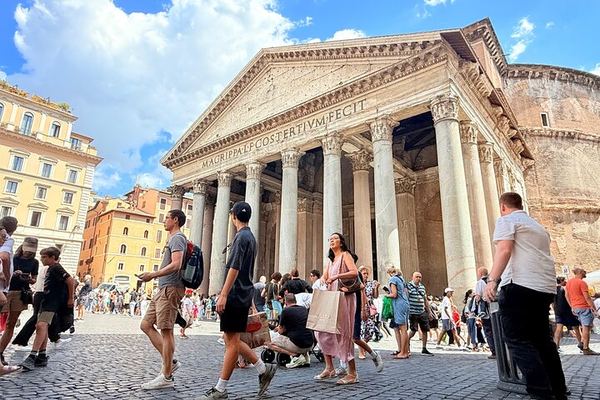
Pantheon Entry Ticket with a Host at Piazza Capranica and a Phone Audio Guide
A host with a white flag meets you in Piazza Capranica and walks you through the door; from there the audio guide runs on your own phone at your own pace.
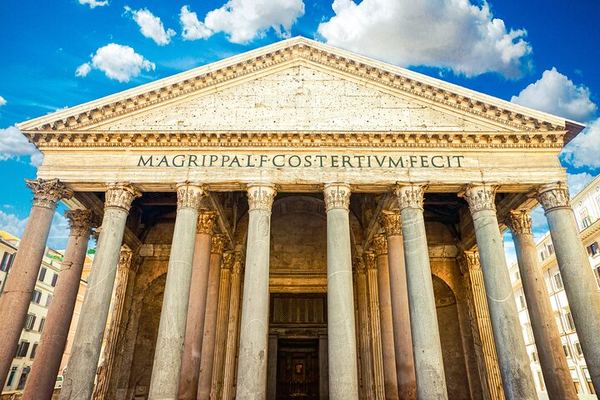
Pantheon Entry Ticket with an Audio Guide to Its Roman and Christian Lives
The commentary follows the building through both of its lives, from Hadrian's temple to the church that saved it, and runs on your own phone at your own pace.
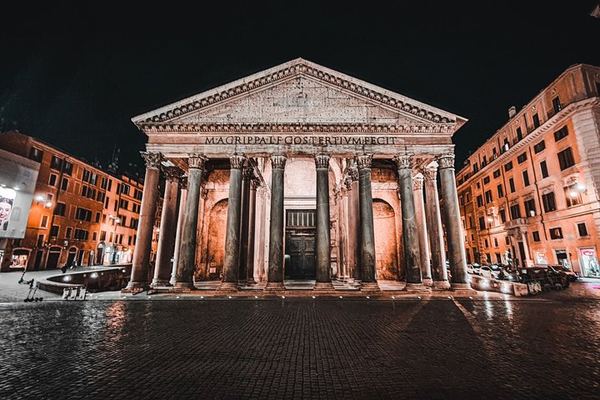
Pantheon Ticket and Audio Guide, Meeting Outside the Hotel Minerva
The meeting point is a minute from the portico, in front of the Hotel Minerva, and the commentary carries the rest of the visit at your own speed.
Pantheon Audio Guide in Eight Languages, 15 Stops in 35 Minutes
Fifteen listening points across about thirty-five minutes, in one of eight languages, with the entry reservation that weekends make compulsory.
Ratings collected by Viator and Tripadvisor
Data verified on. Ownership, prices and rules: Ministry of Culture page for the Pantheon, read 2 September 2026. Catalogue prices and listing counts read 7 October 2026.


